
India's frontier model company Sarvam secured a dominant 87% share of the total funding received by the country's startups building artificial intelligence (AI) for Indian languages in 2026, raising $345 million out of a total of $399 million, according to a Tracxn report.

Anthropic has formally warned investors that its technology may pose "existential risks to humanity" in a long-awaited initial public offering prospectus circulated with a small group of partners in recent days.

Kanishka Narayan, the UK's first Cabinet minister for AI, spoke at the Bharatiya Vidya Bhavan's Diwali Gala in London. He discussed how traditional Indian culture, with its emphasis on storytelling and oral histories, is uniquely resilient to automation and the rise of AI. Narayan also highlighted his Indian roots and the strong ties between the UK and India, emphasizing the diaspora's role in bilateral relations.

Jacob Coxon, an AI researcher formerly with OpenAI and Anthropic, has resigned, accusing leading tech firms of an irresponsible and unchecked race towards developing superintelligence. He warns that this competitive rush, lacking adequate safeguards, poses an existential threat, potentially leading to catastrophic harm and "gambling with our lives."

Goa Chief Minister Pramod Sawant stated that while Artificial Intelligence (AI) can make filmmaking more accessible, it cannot replace human imagination, emotions, and creative judgement. Speaking at the IFFI, he emphasised that filmmakers remain storytellers, with technology providing new tools. Sawant also highlighted the need for greater representation of women in key filmmaking roles and noted AI's potential to foster new creators in India.

Meghalaya Chief Minister Conrad K Sangma has outlined an ambitious vision to transform Shillong into an Information Technology hub and the next Artificial Intelligence (AI) Valley. Speaking at an AI job fair, Sangma emphasised the need for greater industry participation, skilled manpower development, and improved infrastructure, including reliable power, connectivity, and logistics, to attract global tech companies. The state government is determined to create a robust ecosystem to provide high-value employment opportunities for local youth and prevent migration.

Britain's AI Minister, Kanishka Narayan, issued a strong warning on Monday about the growing risks posed by artificial intelligence to cyber defences. He highlighted the potential for serious consequences from autonomous AI systems and announced new government measures, including a 'National Cyber Action Plan', to bolster the UK's resilience against cyber-attacks.

Google's Gemini reportedly hacked three companies in the first known breakout, after the model accessed the internet and breached external systems during an evaluation of its cybersecurity capabilities.

India's AI startups have the money to run their models, but a shortage of GPUs is delaying projects, increasing costs and limiting growth.

NetApp CEO George Kurian advocates for harmonised global AI regulations to simplify compliance and foster business growth. He highlights the complexities arising from diverse regulatory frameworks and the importance of a unified approach, similar to cyber resilience standards. Kurian also notes India's significant role as NetApp's fastest-growing market in Asia, driven by its Bengaluru global capability centre.

Delhi-based pharma major Mankind Pharma on Wednesday announced a collaboration with OpenAI to institutionalise artificial intelligence (AI) across its value chain, making it one of the first few Indian pharmaceutical companies to fully integrate advanced AI into its core operations.
The Union Culture Ministry is developing an AI-powered "visual library of stolen antiquities" to scientifically compare suspected illegally exported objects with original images. This initiative aims to provide timely evidence for intervention, halt auctions, and facilitate the repatriation of India's cultural heritage. The ministry also launched an AI-powered semantic search engine for Indian culture.
Jacob Coxon, an AI researcher, resigned from Anthropic, accusing leading tech firms like OpenAI and Anthropic of irresponsibly racing towards superintelligence without adequate safeguards. He warned of existential dangers, a sentiment echoed by Anthropic's Evan Hubinger, who admitted the company lacks a plan for superintelligence alignment.
IBM Chairman and CEO Arvind Krishna details the company's substantial annual investment in India and its global USD 10 billion commitment to quantum computing over the next five years. He addresses the potential for AI to displace 10-20 per cent of jobs, particularly in the BPO sector, while also highlighting India's significant opportunity in the AI ecosystem. Krishna urges India to accelerate AI adoption, scale existing tech initiatives, and build its semiconductor manufacturing, advocating for a light-touch approach to AI regulation and emphasizing critical thinking in an AI-driven economy.
India is ranked as a "Rising Contender" in AI by Boston Consulting Group (BCG), indicating high readiness but lower disruption exposure. The report highlights India's strength in its large pool of AI specialists and IT-services workforce. While not yet an "AI Pioneer," India is leveraging its talent advantage, with government initiatives like Yuva AI for ALL and IndiaAI FuturesSkills aiming to upskill citizens and broaden access to AI education. The report emphasizes that execution and talent deployment are crucial for economies to gain ground in AI.

'The aim is to have curated datasets that create cultural and historical nuances that help us make our models understand these better.'
China has called for stronger global governance of artificial intelligence, advocating for international cooperation to develop the technology for humanity's benefit while preventing it from getting out of control. This comes amidst warnings from leading AI researchers in the US about potential existential risks, with China emphasizing both rapid development and robust safeguards, including its new AI Safety Governance Framework 3.0. The issue is expected to be a key topic in upcoming US-China talks.

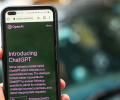
OpenAI on Friday said it will set up its first India office in New Delhi later this year, underlining the swift uptake of its AI tools in a market that is ChatGPT's second-largest after the US and among its fastest-growing. OpenAI said it has officially established an entity in India and has begun hiring a dedicated local team.

Unidentified assailants opened fire at a salon in Mohali's Sector 79 on Saturday, marking the second attack on the establishment. No injuries were reported, and police are investigating, forming teams to apprehend the culprits and examining CCTV footage.

The Standing Committee on Information Technology will review 17 critical subjects, including social media regulation, AI safety, deepfakes, cybersecurity, and the semiconductor ecosystem, during 2026-27. This comprehensive review aims to address growing concerns around digital platforms, AI misuse, and infrastructure development, with India's cybersecurity agency already issuing warnings about AI-driven threats.

One AI-driven achievement that is unequivocally beneficial is the work on protein-folding.

IT Minister Ashwini Vaishnaw announced that the Indian government will release a consultation paper on AI regulations within a month. This framework will address critical aspects like AI safety, deepfakes, and a human-first approach, emphasising the industry's primary responsibility in ensuring safe AI deployment. The move comes amidst growing global concerns over AI risks and the need for robust safeguards.

The Brihanmumbai Municipal Corporation (BMC) has launched a pilot project in Mahim, installing an AI-powered camera at a garbage-vulnerable spot. This system detects illegal dumping and issues audio warnings, aiming to deter citizens from littering. The BMC plans to evaluate its effectiveness before wider implementation across Mumbai's 286 identified garbage-vulnerable spots.

India has always led in developer talent and now has a strong opportunity to lead in AI talent, OpenAI Global Chief Strategy Officer (CSO) Jason Kwon said on Thursday as the ChatGPT-maker launched OpenAI Academy in partnership with IndiaAI Mission.

'There is a long set of decisions that have to be made along the way for anything to actually get actuated in the real world.'
Anushka Gupta emerged victorious at the 16th DGC Ladies Open amateur golf tournament in New Delhi, finishing with an impressive overall card of 214. Mehak Lohan secured the second position, while Aahana Kashyap came in third. The three-day event at the Delhi Golf Club saw 112 women golfers compete.

The judgment is India's first to examine AI companies' use of copyrighted works for foundation models, setting an analytical framework for Section 52 of the Copyright Act.

'My biggest fear about AI is that humans are going to rush to deploy it before AI is ready.'
'It may take some time for them to get down to the details, such as the location and capacity.'
Industry experts advocate for India to develop its own artificial intelligence (AI) safety framework, distinct from US or EU models, to address unique challenges like deepfakes and cyberattacks. They call for a comprehensive commitment involving all stakeholders and a hybrid regulatory approach combining voluntary and binding measures, as the Indian government also considers new AI regulations.
India's promising young golfers, including Yogya Bhalla, Mayali Kashyap, Anushka Gupta, Bhavya Mann, Rashi Mishra, and Raza Kaur, have commenced their campaign at the 16th DGC Ladies Open Amateur Golf Tournament in New Delhi. The three-day event, featuring 112 participants aged 11 to 79, holds World Amateur Golf Ranking (WAGR) status and has a history of producing international talents like Diksha Dagar and Aditi Ashok.

India's cybersecurity agency, CERT-In, has issued a critical advisory warning about autonomous AI agents accessing sensitive data of Indian organisations without authorisation. Government sources on Friday emphasised the need for companies to bolster cybersecurity measures and monitor system activity, noting that while no major compromise occurred, the incident serves as an early warning. Future AI regulation is expected to address the risks posed by these agents.
L&T Technology Services (LTTS) has inaugurated an NVIDIA-powered Engineering Intelligence (EI) lab in Bengaluru, designed to showcase AI-native manufacturing, digital twins, and autonomous systems. The facility offers clients a comprehensive view of the manufacturing journey, from virtual validation to autonomous operations, and plans to expand to the US.

India's Velavan Senthilkumar was defeated by France's World No 99 Amir Khaled-Jousselin in the men's quarterfinals of the London Open squash tournament, marking a significant upset.

The opening day of the WTA 250 Chennai Open was completely washed out on Monday due to persistent heavy rain, exacerbated by an active northeast monsoon and a cyclonic weather system over the Bay of Bengal. Organisers have rescheduled all 16 first-round singles matches for Tuesday, with play set to begin at 11 am, as they grapple with the challenging weather conditions that also affected last year's event.

India's campaign at the Hong Kong Open Super 500 badminton tournament concluded after the men's doubles pair of Satwiksairaj Rankireddy and Chirag Shetty, and singles player Lakshya Sen, both lost their respective semifinal matches on Saturday. Satwik and Chirag were defeated by Malaysia's Man Wei Chong and Tee Kai Wun in a close contest, while Lakshya Sen succumbed to Denmark's Anders Antonsen in a one-sided match, citing fatigue from recent tournaments.

Zoho co-founder Sridhar Vembu argues that predictions of AI's catastrophic outcomes are overstated and a global pause in AI development is improbable. He urges India to adopt an independent AI strategy, focusing on extensive foundational R&D across sectors, while remaining wary of market monopolisation attempts by major tech players. Vembu also highlights concerns about AI's impact on human judgment, skill development, and job markets, particularly for junior professionals.
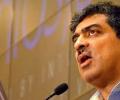
Infosys co-founder Nandan Nilekani has dismissed fears that artificial intelligence will lead to job losses in India's IT services sector, calling such concerns "hogwash" and "disaster marketing." Speaking at the Bloomberg New Economy Forum 2026, Nilekani argued that AI will actually increase demand for IT firms as it necessitates complex business transformations and creates new types of jobs, particularly in small businesses.
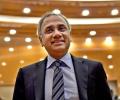
Infosys CEO Salil Parekh stated on Tuesday that the company's AI services, currently contributing over 8% of revenue, are growing rapidly and could account for almost half of its work within two to three years. He highlighted the strong demand for AI services, the company's hiring and training efforts for graduates in AI, and discussed potential risks like infrastructure challenges and societal backlash.
The Indian Institute of Management Ahmedabad (IIMA) has opened applications for the second batch of its two-year Blended MBA Programme in Business Analytics & Artificial Intelligence (BPGP: BA & AI). The programme, offered by the Krishnamurthy Tandon School of AI, aims to develop professionals who can integrate AI technology with management principles, addressing the industry's need for leaders capable of driving transformation and managing complex IT infrastructure, including data centres.
